Blog post · June 9, 2026 · 8 min read
Benefits of Using Thin Brick Formliners in Precast Concrete
Thin brick formliners give precast concrete the masonry aesthetic without the weight, labor, or cost of real brick veneer. Here's what architects need to know before specifying.

Brick reads as permanence. It signals quality to clients, fits naturally into urban contexts, and holds up aesthetically across decades. The problem is that traditional brick veneer brings real costs with it: mortar, ties, labor, scheduling complexity, and added weight that can ripple into foundation and structural decisions. Thin brick formliners solve most of that. They embed a brick-pattern texture directly into the concrete surface during casting, so the masonry aesthetic is built in from the start, not applied afterward.
This is an underused specification tool. Architects who know it well use it to hit aesthetic targets on commercial facades, sound walls, and tilt-up panels without blowing the budget or adding trades. Here's how it actually works, and when it makes sense to specify it.
What Thin Brick Formliners Actually Do
A thin brick formliner is a patterned liner placed inside the formwork before the concrete pour. When the concrete cures and the form is stripped, the surface carries the negative impression of the liner: coursed brick units, recessed mortar joints, and the shadow lines that give traditional masonry its visual depth.
The result isn't a coating or an applied finish. It's the concrete surface itself, shaped during the pour. No separate brick units. No mortar. No wall ties. The masonry look is integral to the panel.
The recessed joint profile is what does the visual work. Shadow lines at the mortar joints create the same depth cues the eye uses to read real brick coursing. At normal viewing distances, the effect is convincing. On sound walls, retaining walls, and building facades seen from the street or a parking lot, most observers can't tell it apart from traditional brick veneer.
Where Thin Brick Formliners Perform Best
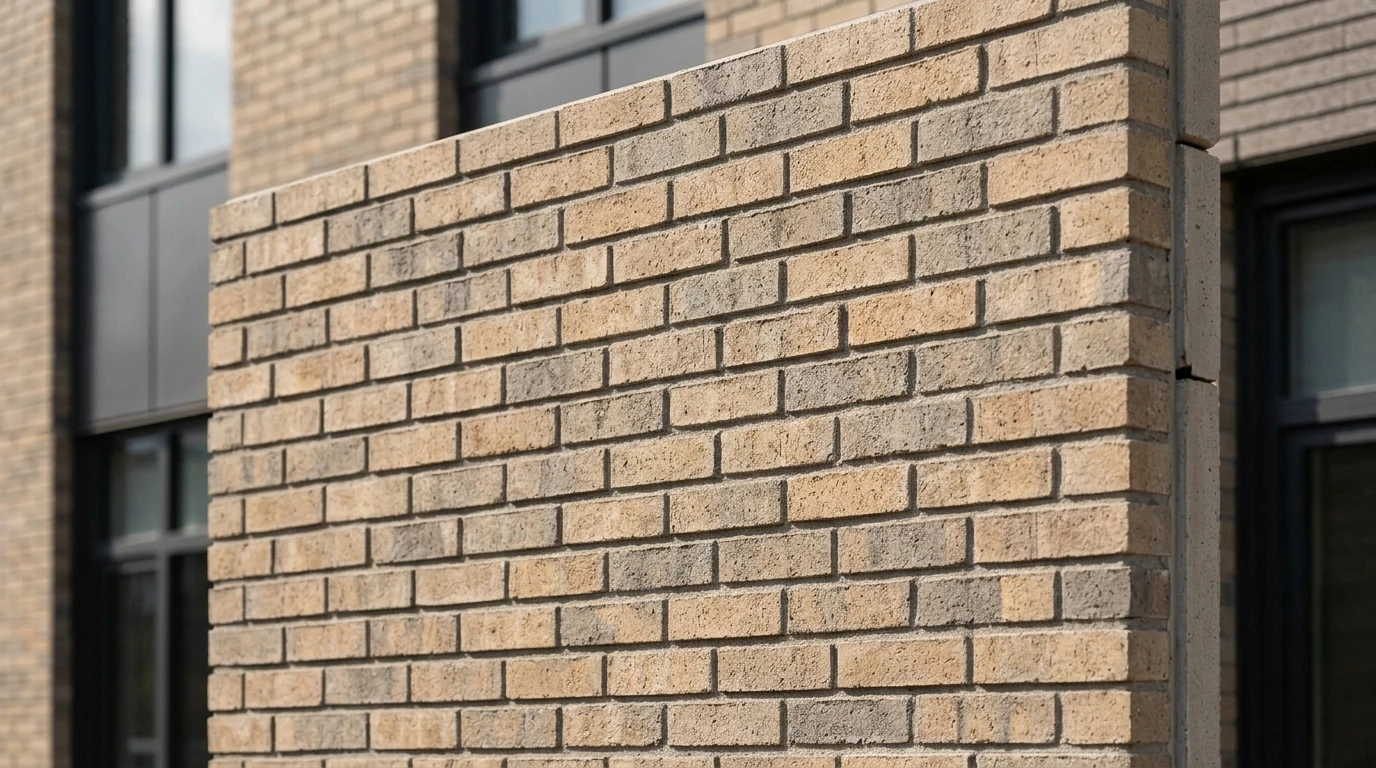
Not every application is the same, and the formliner choice should follow the project type.
Commercial building facades are the most common use case. Precast panels with thin brick texture can be fabricated off-site, delivered on a tight schedule, and erected quickly. The wall system is lighter than a comparable brick veneer assembly, which matters on multi-story buildings where reduced cladding weight can affect structural framing and foundation sizing.
Sound walls are a strong fit because they're often long, repetitive runs where a masonry aesthetic is specified for community acceptance but full brick construction would be impractical at scale. Thin brick formliners let DOT agencies and their contractors deliver that aesthetic efficiently across hundreds of linear feet.
Retaining walls benefit similarly. The texture adds visual interest to what would otherwise be a plain concrete face, and the durability of the concrete substrate suits soil-contact or near-grade applications well.
Tilt-up construction is a growing application. Tilt-up panels are cast flat on the slab and tilted into place, which makes formliner application straightforward. Thin brick formliners are compatible with this method, giving tilt-up buildings a masonry character that would otherwise require a separate veneer system. Customrock offers thin brick specifically for tilt-up, which is worth noting when specifying for that delivery method.
Bridge abutments round out the common applications. Infrastructure projects increasingly require aesthetic treatments on visible concrete faces, and thin brick texture is one of the patterns that satisfies both DOT aesthetic requirements and public expectations.
The Reuse Economics: Plastic vs. Urethane
The formliner material choice is a cost decision, and it's worth understanding the math before specifying.
Plastic foam liners for brick patterns are the lower-cost entry point. They're well-suited for one-time pours or projects where the pattern won't be repeated. Expect roughly 1 to 10 reuses per liner. For a single project with a limited panel count, the lower upfront cost makes sense.
Urethane foam liners carry a higher unit cost but deliver up to approximately 100 reuses per liner. On a large-scale precast project, or any application where the same panel geometry is being cast repeatedly, the cost-per-pour for urethane drops significantly when amortized across the full production run. A precast manufacturer running the same brick pattern across dozens or hundreds of panels will almost always come out ahead with urethane.
The specification decision isn't complicated once you know the production volume. Low volume, one-time pour: plastic. High volume, repeat use: urethane. The contractor's precast shop can confirm the expected pour count, and that number should inform which liner type you specify or recommend.
Customrock offers both options, and the formliner product lines cover the full range from budget-sensitive plastic liners to high-detail urethane.
Design Control You Don't Get with Real Brick
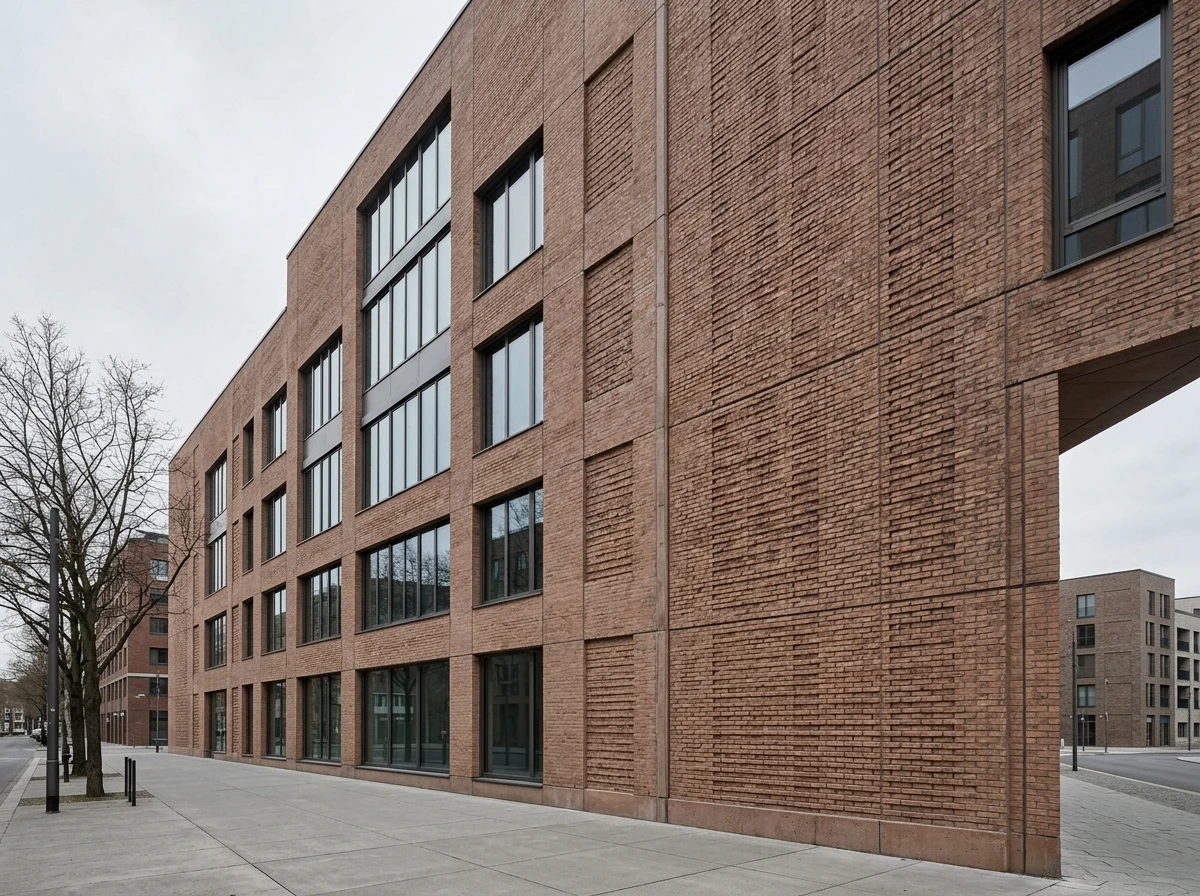
Something that gets overlooked in the cost conversation: thin brick formliners actually give architects more design control than traditional masonry in several respects.
Integral color pigments can be added to the concrete mix to match a wide range of brick color palettes, from warm reds and buffs to cooler grays and charcoals. Post-pour staining extends the range further. The color is consistent across the panel face because it's in the material itself, not applied to individual units that vary batch to batch.
Coursing patterns are set by the liner geometry, which means they're consistent across every panel. Running bond, stacked bond, and other coursing configurations are available as distinct liner patterns. On a project where panel-to-panel consistency matters, that's a clear advantage over field-laid brick, where slight variations in joint width and unit placement are unavoidable.
Panel geometry itself is a design variable. Precast panels can be cast in sizes and shapes that would be structurally or practically difficult to achieve with unit masonry. Curved panels, large-format panels, and panels with integrated reveals or rustication lines are all achievable in precast with the right formliner.
How to Specify Thin Brick Formliners Correctly
A specification that leaves too much to the contractor's interpretation creates problems downstream. Here's what to lock down.
First, specify the liner material (plastic or urethane) based on the reuse requirements of the project. If you're not sure of the pour count, default to urethane for any commercial precast application where the pattern will be used more than a handful of times.
Second, specify the pattern by name or number. Customrock's catalog includes brick patterns across multiple coursing configurations. If you've specified a pattern from another supplier on a previous project, Customrock can fabricate a matching liner, including copying or matching existing pattern numbers from other suppliers. That capability matters when a contractor can't source the original liner and needs an equivalent.
Third, address color in the spec. If integral color is required, specify the pigment system and target color range. If post-pour staining is the intended finish, note that clearly so the precast manufacturer doesn't assume a natural gray finish.
Fourth, confirm compatibility with the contractor's forming system. Thin brick formliners work with standard precast formwork, but the contractor should verify liner dimensions against their form dimensions before ordering.
For contractors sourcing liners after the spec is set, Customrock's central U.S. manufacturing locations in Texas and Minnesota support faster nationwide delivery than West Coast suppliers, which matters when a precast schedule is tight and lead time is a constraint.
The Procurement Path
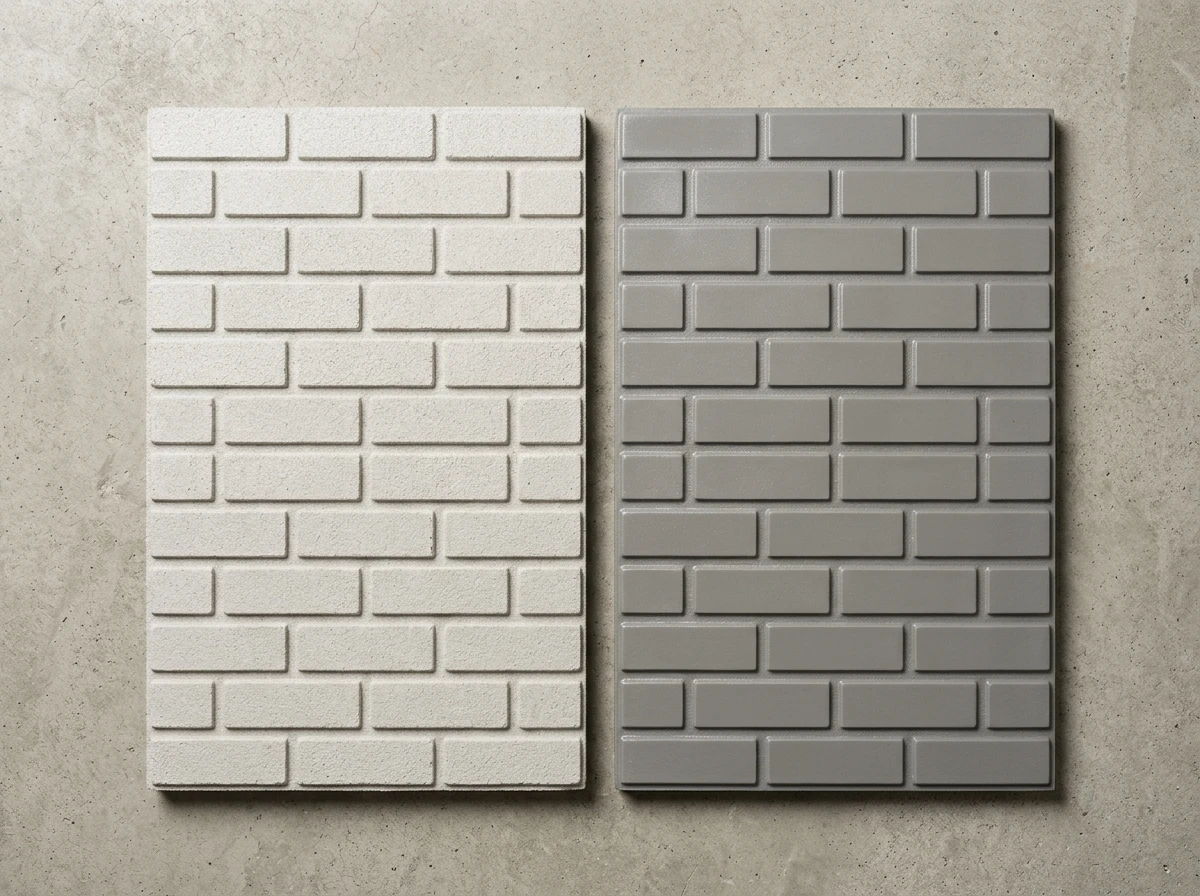
Architects specify. Contractors source. The two parts of that process need to connect cleanly.
When the spec is clear on pattern, material, and color, the contractor's job is straightforward: source the liner, confirm lead time, and schedule the pour. Customrock sells direct and through distributors, so contractors with an existing distributor relationship can often source through that channel. Direct orders work well for contractors who've worked with Customrock before and know the process.
The custom fabrication capability is worth knowing about at the specification stage, not just when a problem arises. If you're designing a project where a standard brick coursing pattern isn't quite right and you want a modified joint profile or a non-standard unit size, that's a conversation to have early. Custom patterns take more lead time, and the earlier that's built into the schedule, the less pressure it creates for the contractor.
Customrock has been working with architects and precast manufacturers on pattern specifications since 1971, which means the experience with complex specifications is real. That's useful when you're working through a non-standard application or trying to match an existing building's brick character on an addition.
The Specification Decision in Plain Terms
If a project calls for a masonry aesthetic on a concrete structure, thin brick formliners deserve serious consideration before you default to brick veneer. The installed cost is lower. The schedule is simpler. The wall is lighter. And the design flexibility is, in several respects, greater than what traditional masonry allows.
The specification isn't complicated once you understand the material options and the reuse math. Plastic for low-volume pours. Urethane for high-volume or repeat-use applications. Pattern and color locked down in the spec so the contractor can source and schedule without ambiguity.
If you're specifying a project where this might apply and you're not sure which liner configuration fits, that's exactly the kind of question Customrock's team is set up to answer. The pattern catalog is a starting point. The real value is in knowing which option fits your specific application.
FAQ
What is a thin brick formliner?
A thin brick formliner is a patterned liner placed inside formwork before a concrete pour, leaving a brick texture with recessed mortar joints directly in the concrete surface when the form is stripped. The result is an integral masonry aesthetic, not a coating or applied finish.
When should I specify plastic liners versus urethane liners?
Specify plastic liners for one-time or low-volume pours where the pattern will not be repeated, and urethane liners for high-volume or repeat-use applications where the cost per pour drops significantly when amortized across dozens or hundreds of casts.
Can thin brick formliners match a specific color or coursing pattern?
Yes. Integral color pigments added to the concrete mix can replicate a wide range of brick palettes, and post-pour staining extends the options further. Coursing configurations like running bond and stacked bond are available as distinct liner geometries, and custom patterns can be fabricated if a standard option is not the right fit.
Are thin brick formliners compatible with tilt-up construction?
Yes. Because tilt-up panels are cast flat before being tilted into place, applying a formliner is straightforward, and the method is fully compatible with thin brick patterns.
What should I lock down in the specification to avoid problems downstream?
Specify the liner material, the pattern by name or number, the color approach, and confirm dimensional compatibility with the contractor's forming system. Leaving any of those decisions open to contractor interpretation creates ambiguity that slows the schedule.
How far in advance should custom pattern work be initiated?
Custom patterns require more lead time than standard catalog options, so the earlier that need is identified and built into the project schedule, the less pressure it creates for the contractor during the precast production phase.