Blog post · June 9, 2026 · 9 min read
Form Liner Selection for Commercial Concrete: How to Specify the Right Liner for Every Application
Plastic or urethane form liner? The answer depends on reuse count, detail requirements, and project type. A practical guide for architects specifying concrete finish systems on facades, bridges, and sound walls.
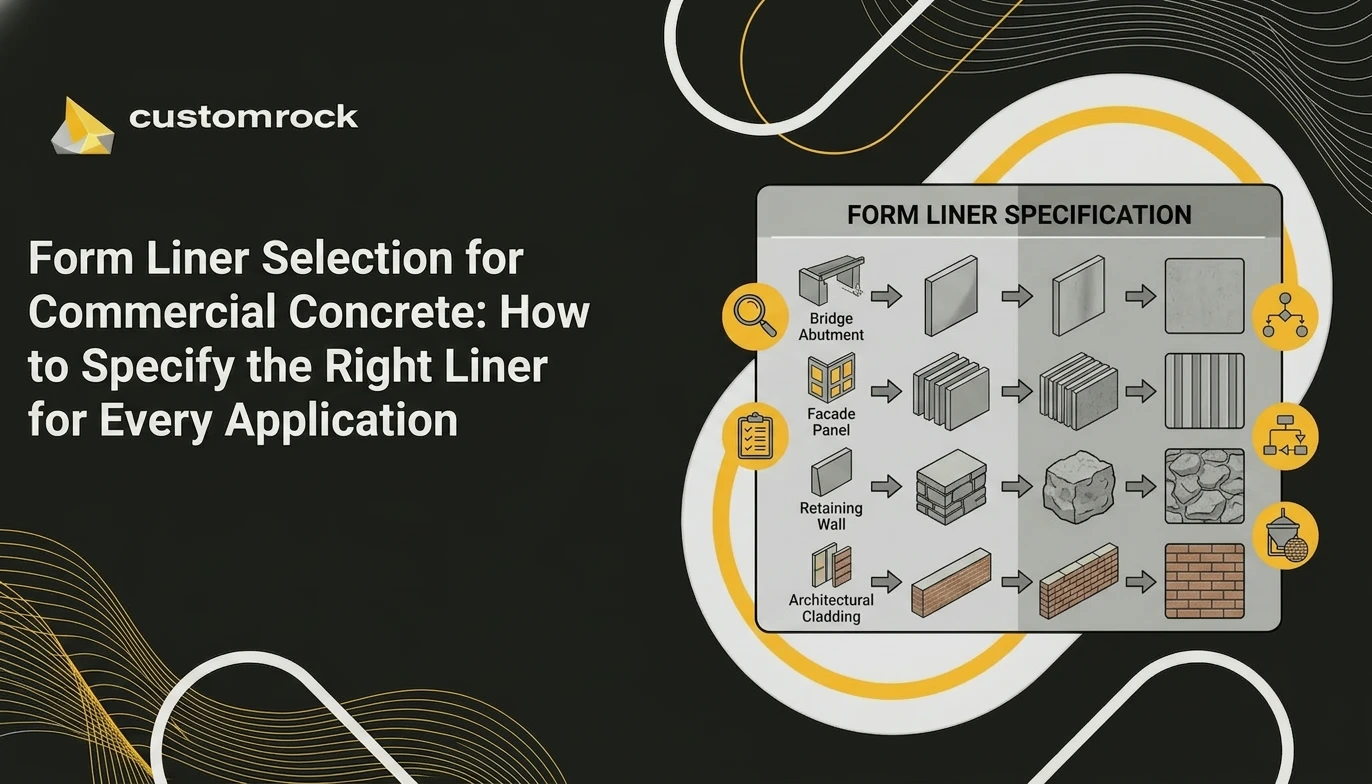
Concrete is the most widely used construction material in the world, and for most of its history it looked exactly like what it was: gray, flat, and utilitarian. Form liners changed that. A form liner installed inside the formwork before a pour imprints texture, relief, or pattern directly into the concrete surface itself. No cladding, no applied finish, no secondary trade. The result is architectural character built into the structure from the first day it cures.
Form liners are not a single product, though. The choice between liner types, pattern families, and reuse specifications has real consequences for project cost, schedule, and design fidelity. Getting that choice right starts at the specification stage, which means it starts with the architect.
The Plastic vs. Urethane Decision Is Really a Math Problem
The most common mistake in form liner selection is treating it as a budget decision rather than a cost-per-pour decision. Plastic foam liners carry a lower upfront price and are rated for roughly 1 to 10 reuses. Urethane foam liners cost more initially but deliver significantly higher detail fidelity and approximately 100 reuses.
For a single retaining wall panel or a one-off facade element, plastic makes sense. The project doesn't need 100 uses; it needs one clean pour at a reasonable price.
For a precast production run of 40 identical bridge fascia panels, the math flips completely. A urethane liner spreads its cost across every panel in the run. By the time you've cycled through 40 or 50 pours, the per-panel cost of the liner is a fraction of what a plastic liner would have cost across multiple replacements. The higher-priced product becomes the cheaper one.
This is the calculation that often gets skipped when a contractor or procurement manager sees the line-item price and reaches for the plastic option. Architects who understand this dynamic can write better specifications and have more productive conversations with contractors about why the spec is written the way it is.
Pattern Categories and Where They Belong
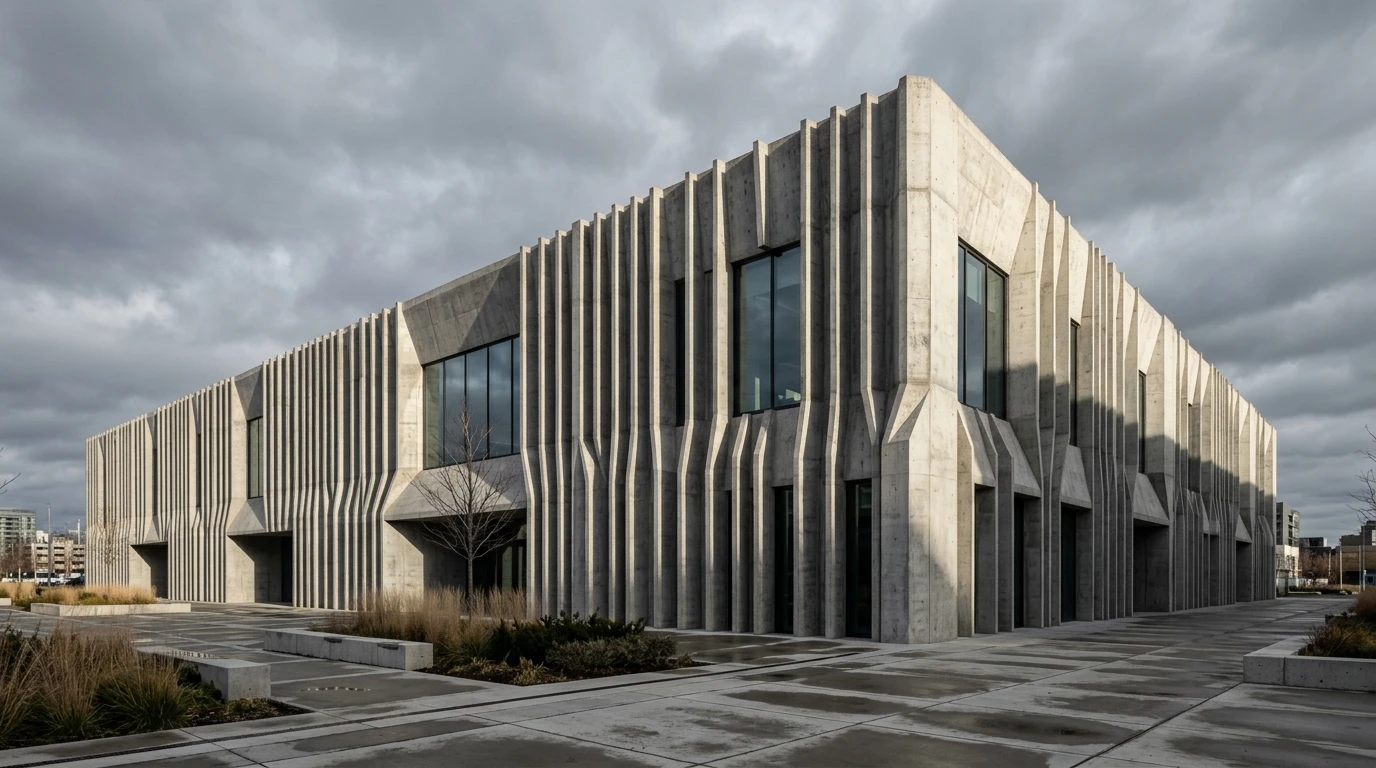
Customrock's pattern library covers six core families: brick, fluted ribs, fractured fins, stone, textured, and wood grain. Each has a natural home in the built environment, and understanding those applications helps architects specify with precision rather than defaulting to a generic texture.
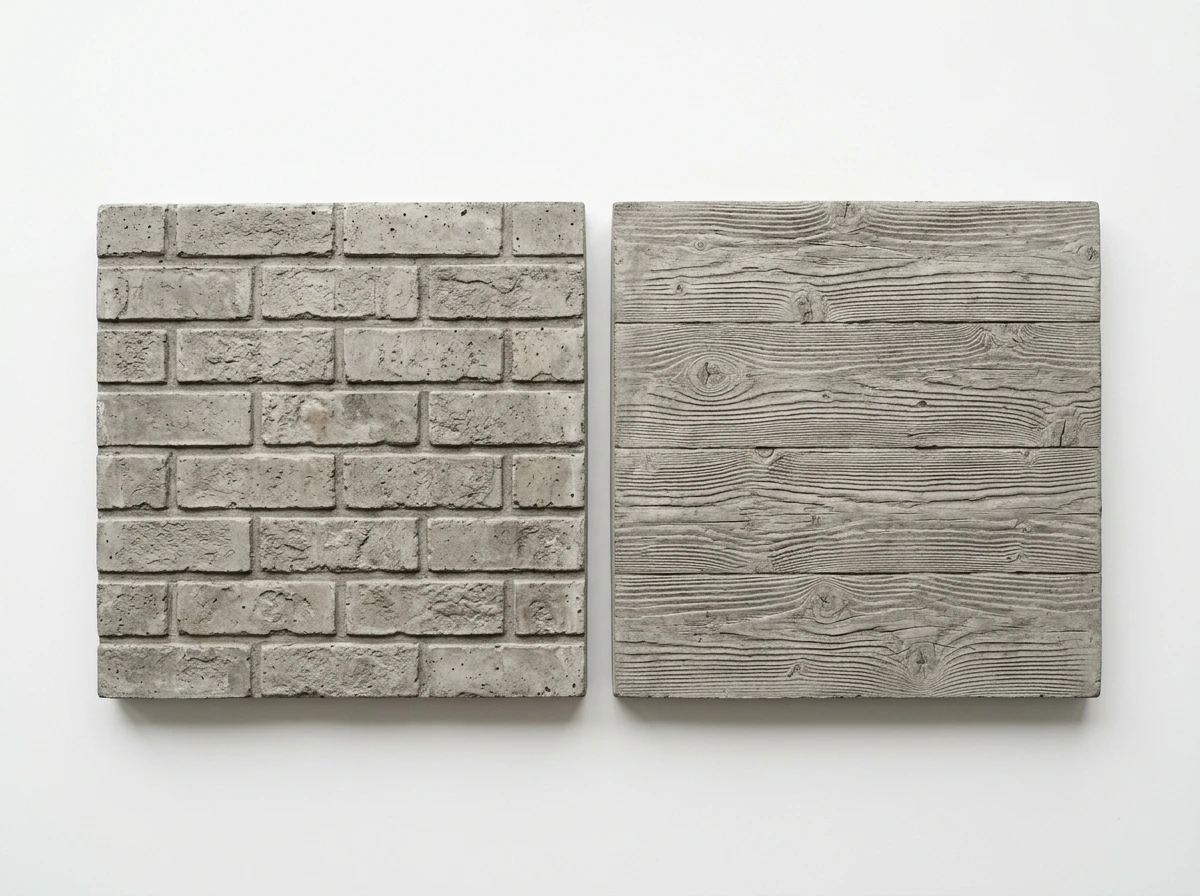
Brick patterns are the most frequently specified for commercial building facades, particularly on tilt-up and precast panels where the goal is a masonry appearance without masonry construction cost or schedule. They read well at pedestrian scale and work across a wide range of architectural styles.
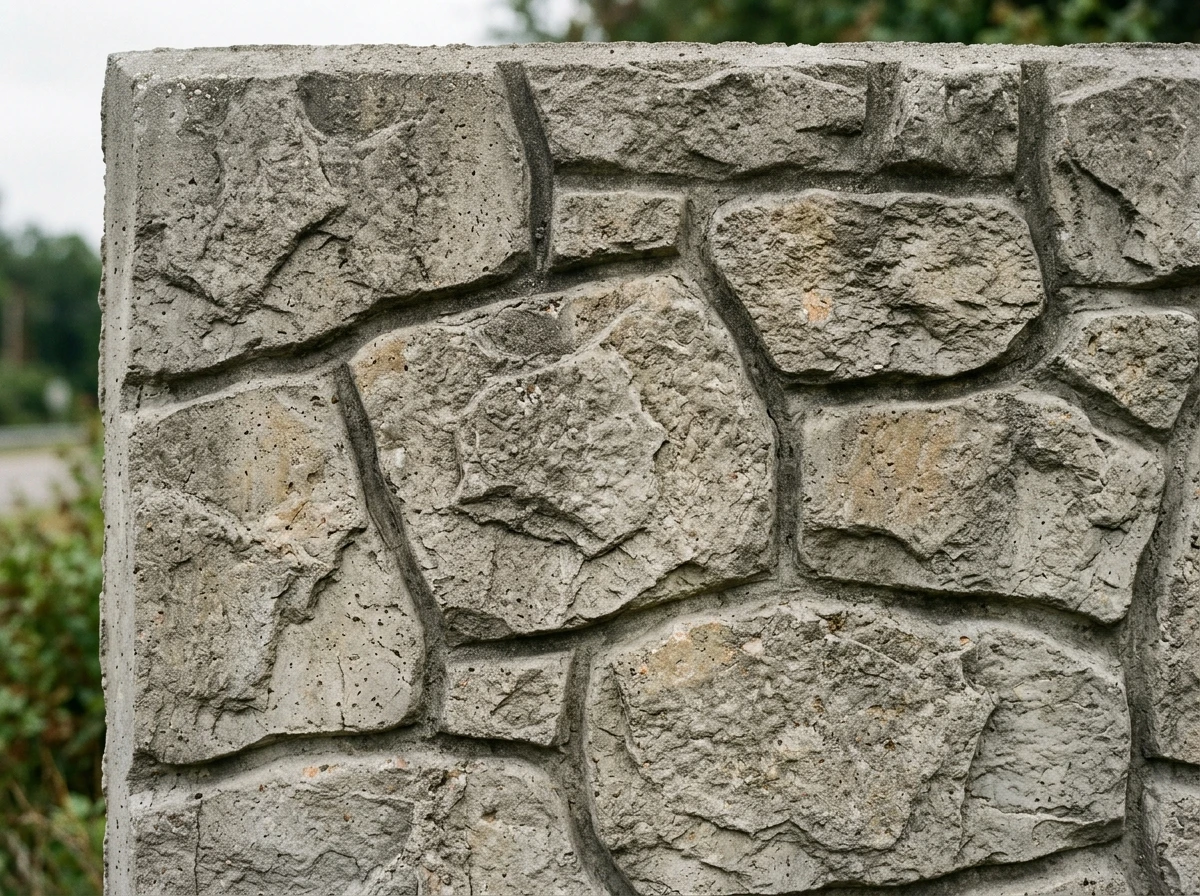
Stone patterns perform similarly on facades but tend toward a more monumental character. They're common on institutional buildings, bridge abutments, and retaining walls where the design intent is permanence and weight.
Fluted ribs and fractured fins are the patterns that make concrete look unmistakably like concrete: geometric, structural, and modern. Fluted ribs create strong vertical or horizontal shadow lines and work well on sound walls, parking structures, and contemporary commercial facades. Fractured fins have a more angular, broken geometry that reads as texture from a distance and as relief detail up close.
Wood grain is an underused pattern category that deserves more attention. Cast-in-place concrete with a wood grain liner produces a surface that retains the warmth of timber while delivering the durability of concrete. It's particularly effective on pedestrian bridges, transit structures, and any application where the design team wants to soften the industrial quality of exposed concrete.
Textured patterns are the broad category: aggregate-like surfaces, rough-hewn finishes, and everything in between. These are often the right choice when the goal is visual interest without a specific material reference.
Infrastructure Projects Are Where Pattern Selection Matters Most
Sound walls along highway corridors and bridge fascias are seen by more people daily than almost any other building surface. A commuter passes the same sound wall hundreds of times a year. That exposure makes pattern selection on DOT infrastructure a public design decision, not just a project-level aesthetic choice.
State transportation agencies increasingly recognize this. Many DOT projects now include architectural treatment requirements for sound walls and bridge structures in high-visibility corridors, and the architect of record working with the agency is responsible for translating those requirements into a concrete finish specification.
The practical implication is that form liner specs on DOT projects need to be precise. The liner type, pattern number, reuse count, and acceptable substitution language all need to appear in the construction documents. Vague specs create substitution opportunities that may not preserve the design intent.
For multi-span bridge projects and long sound wall runs, urethane liners are almost always the right choice. The repeat-pour requirement alone justifies the material cost, and the higher detail fidelity of urethane produces a sharper, more consistent impression across every panel in the run.
Writing a Spec That Survives the Bid Process
The architect's specification is the highest-leverage point in the form liner procurement chain. What gets written in the construction documents directly determines what gets built. A well-written spec protects design intent through bidding, substitution requests, and field execution.
A complete form liner specification should include:
- Liner type: plastic foam or urethane foam, not just "form liner"
- Pattern designation: manufacturer name and pattern number
- Minimum reuse rating: especially important for precast production runs
- Release agent requirements: some patterns require specific release agents to achieve clean release and surface quality
- Acceptable substitution language: either "no substitution" or "or approved equal" with a defined approval process
The substitution language deserves particular attention. "Or approved equal" without a defined approval process is an open door for the contractor to source whatever is available and cheapest. If the design intent depends on a specific pattern, the spec should require submittal review and architect approval before any substitution is accepted.
For projects where the specified pattern comes from a single supplier, it's worth knowing that experienced form liner manufacturers can often copy or match existing pattern numbers from other suppliers. This gives contractors a legitimate sourcing alternative without compromising the pattern the architect specified. That capability is worth referencing in the substitution language: "or approved equal, subject to architect review of sample panel."
You can learn more about how form liners are used across concrete structure types to understand the full range of applications before writing the spec.
Precast vs. Cast-in-Place: Different Priorities, Different Liner Choices
Precast manufacturers and cast-in-place contractors have different relationships with form liners, and those differences should inform specification decisions.
Precast manufacturers run controlled production environments. They cycle the same liner repeatedly, often on tight production schedules, and they need liners that hold dimensional accuracy across dozens or hundreds of pours. Urethane is the standard choice here. The investment in a high-reuse liner pays off quickly in a production context, and consistency of impression matters for quality control across a panel run.
Cast-in-place contractors are more sensitive to lead time. A form liner that doesn't arrive before the formwork assembly date pushes the pour schedule, which pushes the project schedule, which creates real cost exposure. For cast-in-place work, the specification should account for sourcing lead time, and procurement should start earlier than most project teams assume.
Manufacturers with central U.S. production facilities have a meaningful shipping advantage over West Coast suppliers on projects anywhere in the country. For time-sensitive cast-in-place pours, that geography matters.
Thin Brick in Tilt-Up: A Related Technique Worth Knowing
For architects specifying commercial buildings using tilt-up construction, thin brick embedded in tilt-up panels is a technique that deserves a place in the specification toolkit. It produces the appearance of traditional masonry construction with the speed and cost efficiency of tilt-up methods. The brick is set into the form before the pour, becoming an integral part of the panel rather than an applied veneer.
This isn't a form liner application in the traditional sense, but it serves the same design goal: giving concrete construction an architectural finish that reads as something other than raw concrete. Customrock offers thin brick for tilt-up as part of its product line, making it a natural complement to form liner specifications on mixed-finish commercial projects.
The Specification Is the Design
Form liners are one of the few tools in commercial concrete construction that let the architect's design intent survive all the way from drawing to finished surface. But that only happens when the specification is complete, technically accurate, and written with an understanding of how contractors actually source and use these products.
The choice between plastic and urethane isn't a budget call; it's a reuse calculation. The pattern selection isn't decoration; it's a decision about how the building or structure will read at every scale, from the highway at 65 miles per hour to the pedestrian at arm's length. And the substitution language isn't boilerplate; it's the last line of defense for the design.
If you're specifying concrete finishes on an upcoming project and want to work through the liner selection with someone who knows the product options, Customrock has been working with architects on these decisions since 1971. The pattern library, the reuse math, and the custom fabrication capabilities are all worth a conversation before the spec goes to bid.
FAQ
What is the main difference between plastic foam and urethane foam form liners?
Plastic foam liners cost less upfront but are rated for roughly 1 to 10 reuses, while urethane foam liners cost more initially but deliver higher detail fidelity and approximately 100 reuses. The right choice depends on how many pours the project requires, not which liner has the lower line-item price.
How do I decide which pattern family is right for my project?
Match the pattern to the scale and character of the application: brick and stone patterns work well on facades and institutional structures, fluted ribs and fractured fins suit modern commercial and infrastructure work, and wood grain is a strong option anywhere the design team wants to soften the industrial quality of exposed concrete.
Why does substitution language matter so much in a form liner spec?
"Or approved equal" without a defined approval process gives the contractor room to source whatever is cheapest or most available, which may not preserve the design intent. Requiring submittal review and architect approval before any substitution is accepted keeps the specified pattern protected through the bid process.
Should I specify urethane liners for DOT sound walls and bridge fascias?
Yes, urethane is almost always the right choice for those applications. Multi-span bridges and long sound wall runs require repeat pours, and urethane's higher detail fidelity produces a sharper, more consistent impression across every panel in the run.
Do precast manufacturers and cast-in-place contractors have different form liner needs?
Precast manufacturers prioritize dimensional accuracy across dozens or hundreds of pours in a controlled production environment, making urethane the standard choice. Cast-in-place contractors are more sensitive to lead time, so specification and procurement for those projects should start earlier than most teams assume.
What is thin brick in tilt-up and how does it relate to form liners?
Thin brick set into the form before the pour becomes an integral part of a tilt-up panel, producing a traditional masonry appearance without the cost or schedule of masonry construction. It serves the same goal as a form liner: giving concrete an architectural finish that reads as something other than raw concrete.