Blog post · June 2, 2026 · 7 min read
Sound Wall Finish Patterns: Balancing Visual Softness with DOT Specification Requirements
Sound wall finish specification is its own discipline. Learn how to select urethane liner patterns, meet DOT submittal requirements, and maintain pattern consistency across hundreds of panels.
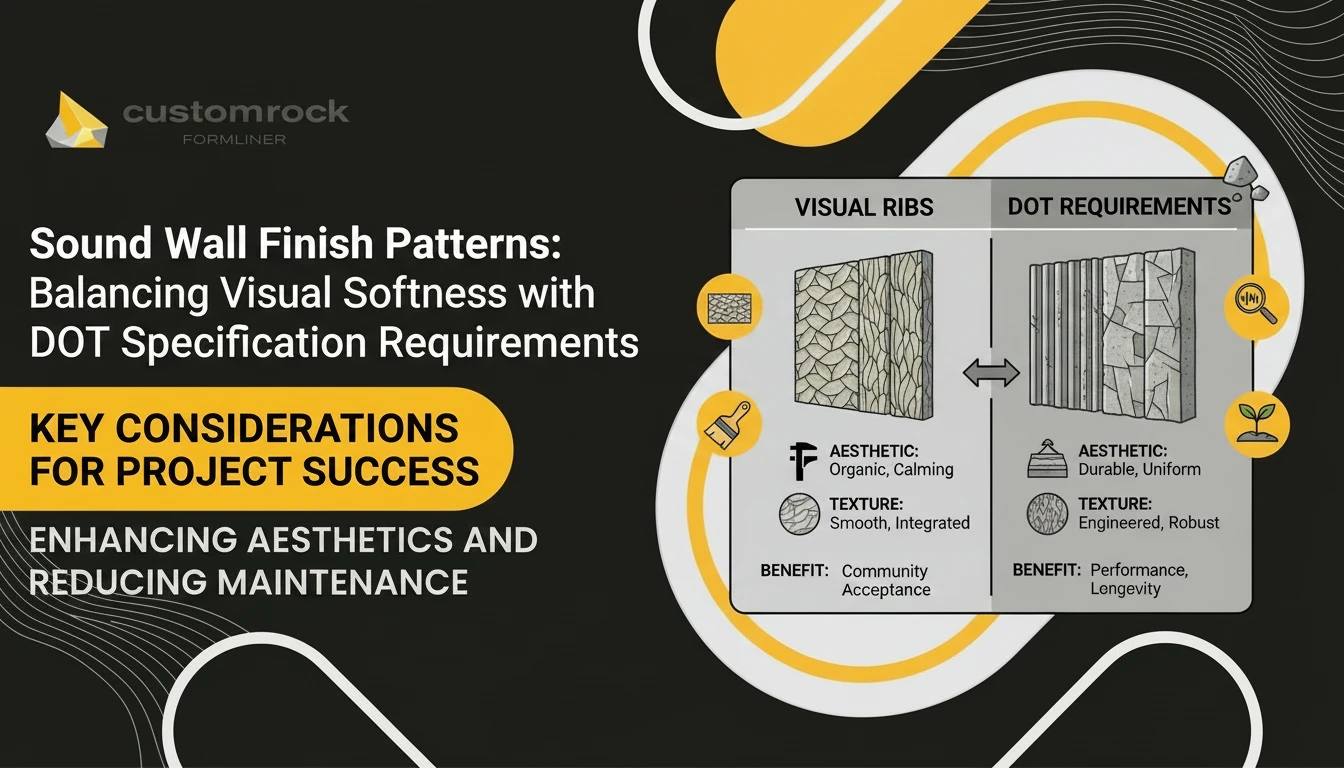
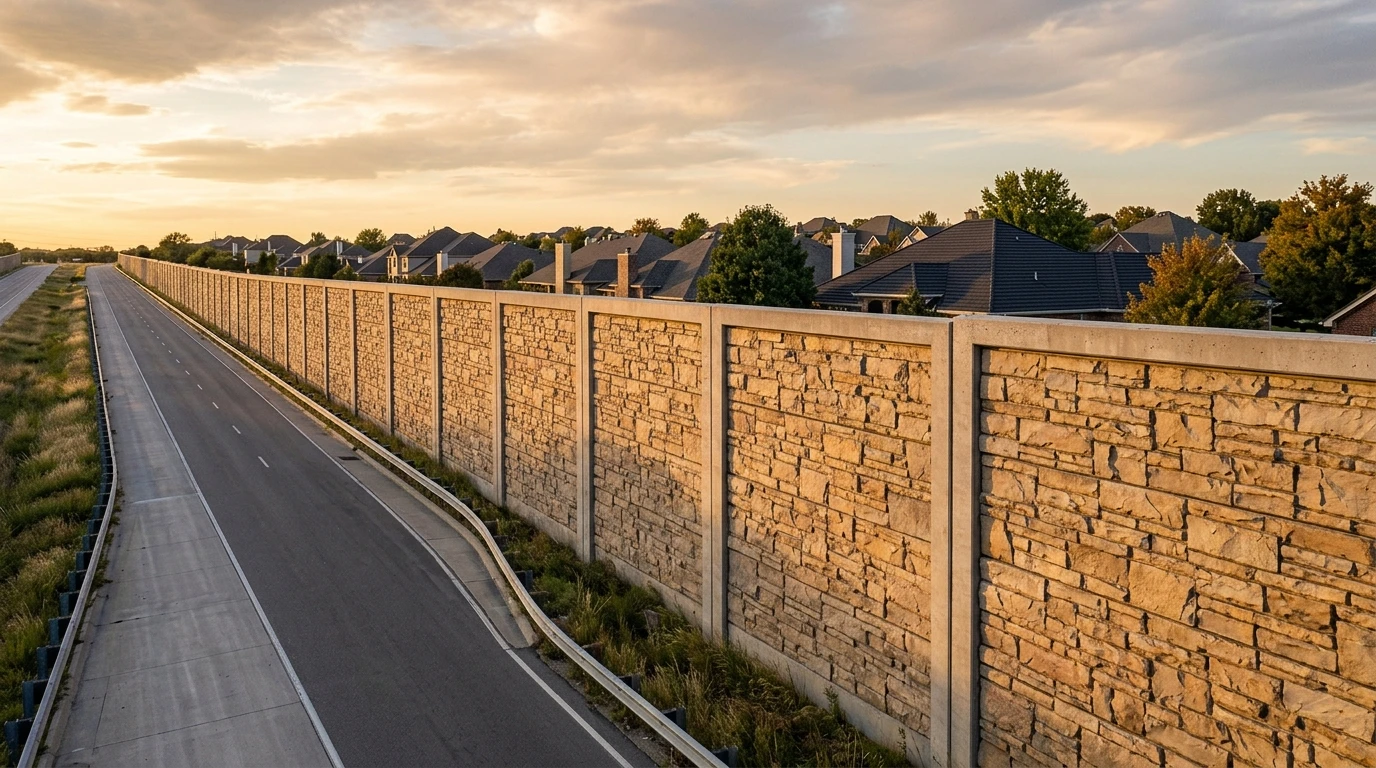
Sound walls are among the most visible concrete surfaces in any U.S. metropolitan corridor. They run for miles. They face neighborhoods, parks, and commuter lines. And yet finish specification on these walls is routinely treated as a late-stage cosmetic decision, something to resolve after the structural and acoustic engineering is locked. That's backwards. Liner selection affects formwork planning, pour sequencing, and contractor coordination from the start. Treat it that way.
Why Sound Walls Are Different
Most architectural concrete applications involve a finite, bounded surface: a bridge pier, a building facade, a retaining wall at a single site. Sound walls don't work like that. A single project can involve hundreds of panels stretching across multiple miles, multiple contractors, and multiple pour sequences. The same liner pattern gets cast again and again, potentially by different crews working at different times.
That scale changes every decision. Pattern consistency matters at a level that simply doesn't apply to a 20-panel retaining wall. Liner economics matter in ways that don't show up on a single-building facade. And the approval process involves stakeholders who have never heard the word "formwork" and don't need to.
Sound wall finish specification deserves its own section in your project documents, not a footnote in the general concrete spec. Architects who treat it that way will have a smoother DOT submittal, a cleaner community review process, and fewer field coordination problems.
The Economics of Liner Reuse
Here's where a lot of specifications go wrong. Plastic foam liners look like the budget-conscious choice on the purchase order. They cost less upfront. But on a sound wall project, liner economics are driven by reuse count, not unit price.
Plastic liners are rated for roughly 1 to 10 reuses. Urethane liners can reach approximately 100 reuses per sheet. On a wall system with 200 panels, those numbers tell a very different story. A plastic liner that needs replacement every 5 to 10 panels accumulates replacement costs across the entire wall run. A urethane liner that holds up for 100 pours amortizes its upfront cost down to a fraction of the per-panel price.
A typical urethane liner order for a sound wall project runs $15,000 to $20,000. That number looks significant in isolation. But once you're past 20 to 30 panels, the per-panel cost of urethane is often lower than plastic when you account for replacements. On a 200-panel wall, the math isn't close.
The practical implication for specifiers: require urethane on any sound wall project where panel count exceeds a threshold you're comfortable defending to the owner. For most sound wall applications, that threshold is low. Customrock's urethane and plastic liner options cover both ends of this range, but the reuse math on sound walls consistently points toward urethane.
Pattern Categories That Work on Long Barrier Walls
Not every form liner pattern reads well at highway scale and linear repetition. Abstract geometric patterns and sharp-edged profiles can amplify the institutional character of a long barrier wall rather than softening it. The three categories that consistently perform well in community review and in practice are stone, wood grain, and brick.
Stone textures are the most forgiving at scale. The organic variation within a stone pattern means that even a repeating liner module reads as naturally irregular to the eye. Coursed ashlar and random rubble both work, though random patterns tend to reduce the visual rhythm of the repeat more effectively on very long runs.
Wood grain brings warmth and horizontal movement to a wall surface. It's particularly effective in residential corridors where the neighborhood context includes natural materials. The grain direction tends to draw the eye along the wall rather than across it, which reduces the sense of visual weight.
Brick patterns offer a familiar, human-scale texture that community reviewers consistently respond to positively. The modular geometry of brick also makes pattern repeat coordination more straightforward, which is a practical advantage on multi-contractor projects.
All three categories share a key quality: they reference materials that people associate with buildings and landscapes, not infrastructure. That contextual familiarity matters in community review processes where the audience is evaluating the wall as a neighborhood feature, not a transportation asset.
Navigating the DOT Submittal Process
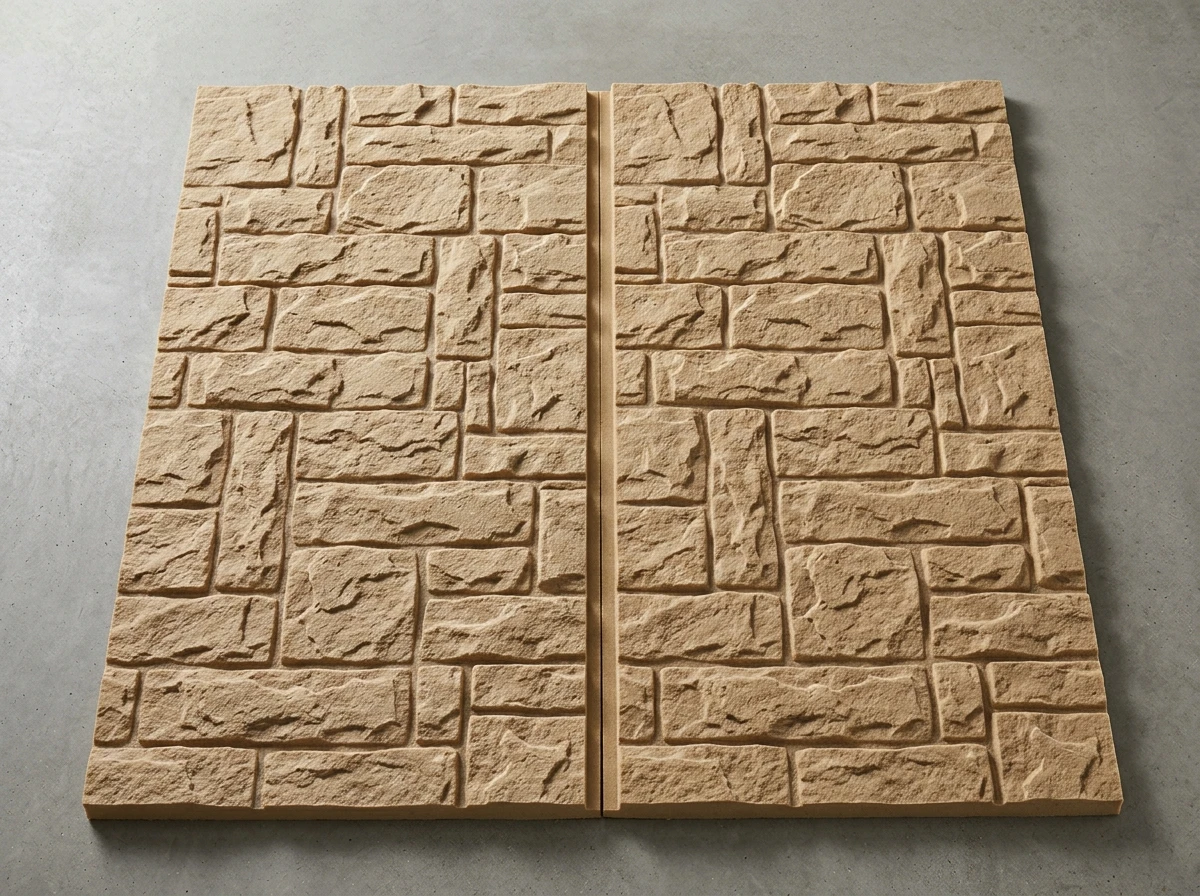
DOT agencies require formal submittal and approval of form liner patterns before construction begins. The typical submittal package includes documentation of liner material type, reuse rating, pattern name or number, and a physical or photographic sample of the cured concrete surface at full scale. Some agencies require a sample panel cast on-site before the production run begins.
The submittal is a design document, not a compliance checkbox. Architects who approach it that way, with a fully developed pattern rationale and a sample panel that demonstrates the finished texture clearly, will move through the approval process faster than those who submit the minimum required documentation.
A few things are worth building into your submittal from the start. First, specify the liner by both pattern name and material type. DOT reviewers need to understand what they're approving, and a pattern name without a material specification leaves the door open for substitutions that affect reuse performance. Second, include the reuse rating in the submittal. Some DOT agencies have minimum reuse requirements; even those that don't will want to understand the liner's expected service life. Third, if the project involves multiple contractors or multiple pour sequences, note that in the submittal and explain how pattern consistency will be maintained.
Specifying Continuity Across a Wall System
This is the detail that gets omitted most often and causes the most visible problems in the field. A sound wall is one surface. The eye reads it that way, even though it's constructed as a series of discrete panels. If the pattern repeat doesn't align at panel joints, the wall reads as visually fragmented, a sequence of repeated stamps rather than a continuous texture.
Coordinating pattern repeat across a multi-contractor sound wall project requires that the repeat dimensions and alignment be locked in the project documents before any contractor begins work. That means specifying not just the liner pattern, but the starting point of the repeat at each panel edge, the joint treatment between panels, and the acceptable tolerance for misalignment.
In practice, this is easier to achieve with organic patterns like stone and wood grain than with modular patterns like brick. A slight misalignment in a stone texture is far less visible than a broken brick course. If you're specifying brick on a multi-contractor project, the alignment requirements need to be explicit and the tolerance needs to be tight.
When multiple contractors are sourcing liners for the same wall system, pattern consistency requires that every contractor source from the same liner pattern and, ideally, from the same manufacturer. This is worth stating explicitly in the specification. Custom fabrication capabilities, including the ability to match or copy existing pattern numbers from other suppliers, give architects a practical option when a specified pattern needs to be sourced from a secondary manufacturer or when a pattern has been discontinued. Customrock's history working with architects on exactly these coordination challenges goes back decades, and the ability to match competitor pattern numbers is a real operational advantage on multi-contractor projects.
Community Review: What the Process Actually Requires
Sound wall projects that go through NEPA review or state environmental review often include a public comment period where the visual character of the wall is a primary concern. The people in those meetings are not evaluating formwork specifications. They're evaluating whether the wall will look acceptable in their neighborhood for the next 30 years.
Architects who understand which textures read as contextually appropriate will have smoother approval processes. Stone, wood grain, and brick consistently outperform abstract or geometric patterns in community acceptance, not because they're objectively superior, but because they reference familiar materials and reduce the perception of the wall as a hard infrastructure intrusion.
The community review process is also where color comes in. Integral color or surface-applied color can significantly affect how a pattern reads at distance. A stone texture in a warm buff or tan reads very differently from the same texture in raw gray concrete. If color is part of your specification, get it into the sample panel early so reviewers are evaluating the finished product, not imagining it.
Building the Spec Section
Sound wall finish specification should stand on its own in your project documents. At minimum, it should cover: liner material type and reuse rating, pattern name and number (with manufacturer), sample panel requirements, pattern repeat alignment at panel joints, acceptable tolerance for misalignment, requirements for multi-contractor sourcing consistency, and DOT submittal documentation requirements.
Architects who specify at this level of detail are not adding complexity. They're removing ambiguity that would otherwise surface as field problems, contractor disputes, or community objections after construction. On a surface that will be visible to hundreds of thousands of people for decades, that specificity is exactly what the project requires.
If you're starting a sound wall specification and haven't yet locked in a liner pattern, begin with the community context and the panel count. Those two inputs will tell you which pattern category fits and whether the reuse economics point clearly to urethane. Everything else follows from there.