Blog post · November 3, 2024 · 7 min read
The Versatility Of Tilt-Up Construction: Applications In Different Industries
TLDR: This blog explores the versatility of tilt-up construction and its applications in different industries. Tilt-up construction is building structures by casting concrete walls on-site and…
TLDR:
This blog explores the versatility of tilt-up construction and its applications in different industries. Tilt-up construction is building structures by casting concrete walls on-site and tilting them into place. It offers numerous advantages such as cost-effectiveness, durability, sustainability, aesthetics, energy efficiency, and flexibility. Plenty of applications exist for tilt-up construction in commercial, industrial, retail, healthcare, educational, and religious facilities. The article highlights the strong potential of tilt-up construction for future building projects. The versatility of the tilt-up construction technique is unparalleled.The Versatility Of Tilt-Up Construction: Applications in Different Industries
 The construction industry is constantly evolving, and new techniques are being developed to make the process efficient and cost-effective. One such technique that has gained popularity in recent years is tilt-up construction.
Tilt-up construction involves casting concrete walls on-site and then tilting them into place to create a building's structure. This technique has become increasingly popular due to its versatility, durability, and cost-effectiveness. Tilt-up construction has plenty of applications in different industries.
In this blog, we will explore the versatility of tilt-up construction and its applications in different industries, along with its advantages and case studies. So, let's dive in and learn more about the exciting possibilities of tilt-up construction.
The construction industry is constantly evolving, and new techniques are being developed to make the process efficient and cost-effective. One such technique that has gained popularity in recent years is tilt-up construction.
Tilt-up construction involves casting concrete walls on-site and then tilting them into place to create a building's structure. This technique has become increasingly popular due to its versatility, durability, and cost-effectiveness. Tilt-up construction has plenty of applications in different industries.
In this blog, we will explore the versatility of tilt-up construction and its applications in different industries, along with its advantages and case studies. So, let's dive in and learn more about the exciting possibilities of tilt-up construction.
The Versatility Of Tilt-Up Construction - Overview
The versatility of tilt-up construction is highly significant in today's construction industry, as it offers several advantages over traditional construction techniques. Tilt-up construction is a cost-effective and time-efficient method that involves casting concrete walls on-site, which reduces transportation costs and saves time on-site. Additionally, tilt-up construction is highly durable and can withstand harsh weather conditions, making it ideal for various industries such as commercial, industrial, retail, healthcare, educational, and religious facilities. Tilt-up construction also provides flexibility in design, allowing architects and builders to create unique and aesthetically pleasing structures. Moreover, tilt-up construction is sustainable, using recyclable materials and energy-efficient features, making it an environmentally-friendly option. The versatility of tilt-up construction has allowed it to become a popular choice for construction projects, offering several benefits that traditional construction techniques may not provide.Process Of Tilt-Up Construction
The process of tilt-up construction involves several steps that work together to create a durable and efficient building. Here is a breakdown of the process:-
Site Preparation:
The first step in tilt-up construction involves site preparation, including clearing and grading the site, excavating foundations, and installing plumbing and electrical utilities. -
Wall Panel Casting:
The next step is casting the concrete wall panels on-site. This process involves building temporary casting beds, where workers pour and finish the panels to the desired specifications. The panels are then allowed to cure for a few days before lifting. -
Lifting and Tilt-Up:
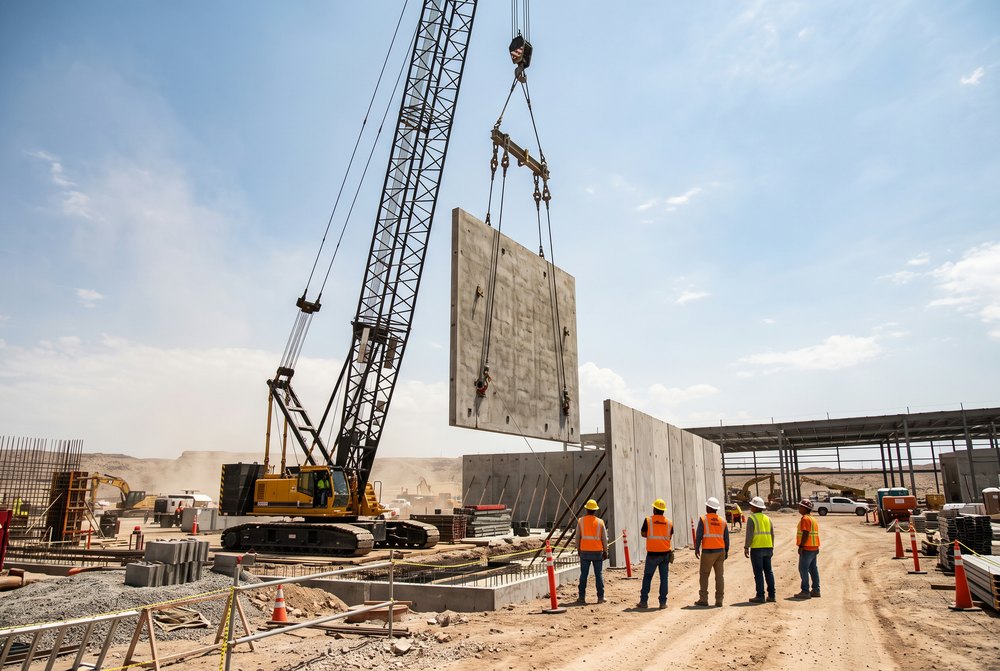
Once the panels have cured, a crane is used to lift and tilt them into place on the foundation. Workers secure the panels to the foundation using steel plates and bolts. -
Connection and Finishing:
Workers connect the roof structure and foundation after the panels are in place. The panels are then finished using different techniques like painting, staining, or sandblasting. -
Interior Finishing:
The final step involves interior finishing, including installing insulation, electrical wirings, plumbing, and other finishes, such as drywall and flooring.
Tilt-Up Construction Techniques
Tilt-up construction is building structures by casting concrete walls on-site and then tilting them into place to create a structure. This process involves the following techniques:1. The first step of tilt-up construction is to create a concrete slab foundation. The foundation is poured and leveled on-site, ensuring it is flat and smooth.
2. The next step involves casting concrete wall panels on-site, typically between 8-12 inches thick.
3. The wall panels are cast horizontally on a clean, flat surface using a formwork prepared with a release agent.
4. Reinforcement bars or steel meshes are then placed into the panels for added strength and stability.
5. Once the panels have cured, window and door openings are cut out using a saw or jackhammer. These openings are then reinforced with steel lintels or frames.
6. Finally, the wall panels are tilted using a crane and carefully positioned on the foundation.
7. The panels are secured in place using braces until properly connected to form the building's structure.
Tilt-up construction is faster than traditional construction methods because the panels can be cast on-site and quickly tilted into place. This reduces transportation costs and saves time on-site, making it a cost-effective and time-efficient construction technique.