Blog post · May 26, 2025 · 7 min read
Why Choose Tilt-Up Construction for Your Next Project with Custom Rock?
Are you searching for a construction method that balances speed, affordability, and durability while delivering stunning design possibilities? Tilt-up construction could be the ideal solution, and at…
 Are you searching for a construction method that balances speed, affordability, and durability while delivering stunning design possibilities? Tilt-up construction could be the ideal solution, and at Custom Rock, we specialize in bringing this innovative technique to life. In this blog, we’ll explore what tilt-up construction is, its key benefits, how tilt-up formliners elevate your project’s aesthetics, and why Custom Rock is your go-to partner for creating high-quality, customized buildings.
Whether you’re planning a warehouse, retail space, or office, tilt-up construction offers a smart, efficient path to success. Discover Our Services
Are you searching for a construction method that balances speed, affordability, and durability while delivering stunning design possibilities? Tilt-up construction could be the ideal solution, and at Custom Rock, we specialize in bringing this innovative technique to life. In this blog, we’ll explore what tilt-up construction is, its key benefits, how tilt-up formliners elevate your project’s aesthetics, and why Custom Rock is your go-to partner for creating high-quality, customized buildings.
Whether you’re planning a warehouse, retail space, or office, tilt-up construction offers a smart, efficient path to success. Discover Our Services
What is Tilt-Up Construction?
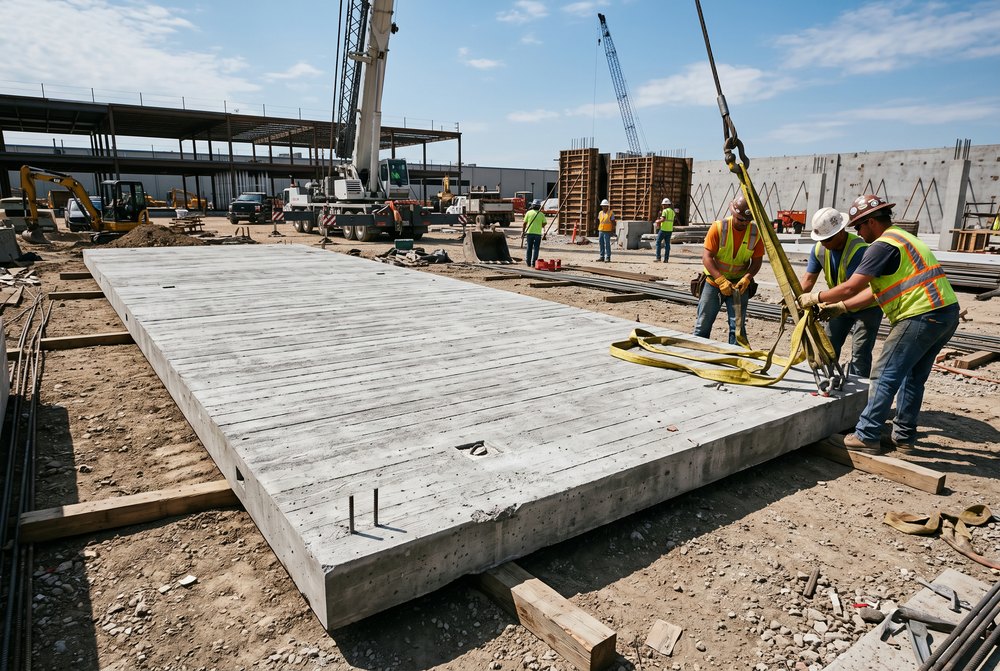
Tilt-up construction is a method where concrete panels are poured on-site, typically on the building’s foundation slab, and then lifted—or “tilted”—into place to form the exterior walls. This technique, used for over a century, is especially popular for commercial and industrial buildings like warehouses, distribution centers, and retail stores. According to the Tilt-Up Concrete Association, over 10,000 tilt-up buildings are constructed annually in the U.S., covering more than 650 million square feet. Its efficiency and versatility make it a preferred choice for projects requiring large, open spaces.Why is Tilt-Up Construction a Smart Choice?
Tilt-up construction stands out for its numerous advantages, making it a cost-effective and practical option for many projects. Here are the key benefits:- Cost Savings: By using locally sourced materials like sand and concrete, tilt-up construction reduces transportation costs. It also requires fewer laborers compared to masonry or steel framing, lowering labor expenses.
- Faster Timelines: Panels are cast and cured on-site, eliminating delays from off-site manufacturing. Once cured, panels are quickly erected using cranes, allowing other construction phases to proceed simultaneously.
- Durability: Concrete panels are highly resistant to fire, pests, and severe weather, ensuring a long lifespan with minimal maintenance. Properly engineered tilt-up buildings can withstand high winds and seismic activity.
- Energy Efficiency: The thermal mass of concrete helps regulate indoor temperatures, reducing heating and cooling costs. This can contribute to sustainability goals, such as LEED certification.
- Design Flexibility: Tilt-up panels can be customized with colors, textures, and patterns, offering endless architectural possibilities. This flexibility allows buildings to reflect unique branding or aesthetic preferences.
- Safety and Security: The robust nature of concrete provides enhanced security and can be designed to meet stringent safety standards, including seismic requirements.
- Expandability: Tilt-up buildings are easy to modify or expand, as panels can be added or removed with minimal disruption.
How Do Tilt-Up Formliners Enhance Your Project?
Tilt-up formliners are specialized molds placed inside concrete forms to create textured or patterned surfaces on panels. At Custom Rock, we offer a wide range of tilt-up formliners, from classic brick and stone designs to modern abstract patterns, allowing you to elevate your building’s appearance. Explore Our Formliner Options Using formliners provides several advantages:- Aesthetic Appeal: Formliners can mimic materials like brick, stone, or wood, giving your building a premium look without the high cost of traditional materials.
- Branding Opportunities: Incorporate logos, patterns, or custom designs to reflect your company’s identity, making your building a visual representation of your brand.
- Functional Benefits: Certain textures can improve acoustics or add visual interest to otherwise plain surfaces, enhancing the building’s functionality.
- Cost-Effective Customization: Formliners offer a budget-friendly way to achieve high-end architectural finishes, adding value without breaking the bank.
What is the Process of Tilt-Up Construction?
Understanding the tilt-up construction process highlights its efficiency. Here’s a step-by-step overview:- Site Preparation: The site is cleared, and the foundation slab is poured to serve as both the floor and casting surface.
- Forming: Wooden forms are built on the slab to shape the panels. Tilt-up formliners are placed inside to create desired textures.
- Reinforcement: Steel rebar is added to the forms to strengthen the panels.
- Concrete Pouring: Concrete is poured into the forms and left to cure for several days.
- Panel Erection: After curing, forms are removed, and cranes lift the panels into place, securing them to the foundation and each other.
- Finishing: Sealants, coatings, or additional features are applied to complete the panels.
- Roof and Interiors: Roofing and interior work begin, often overlapping with panel erection for faster completion.
How Does Tilt-Up Construction Compare to Other Methods?
To illustrate why tilt-up construction is often preferred, here’s a comparison with other common methods:| Aspect | Tilt-Up Construction | Precast Concrete | Pre-Engineered Steel |
| Speed | Fast, but requires curing time | Very fast, panels made off-site | Extremely fast, quick assembly |
| Cost | $25–$40/sq. ft., ideal for large projects | Higher initial cost, suited for complex designs | $10–$20/sq. ft., better for smaller projects |
| Durability | Excellent, resists fire and weather | Very durable, but more costly | Good, but prone to corrosion |
| Design Flexibility | High, customizable with formliners | High, pre-designed elements | Moderate, utilitarian aesthetic |
| Energy Efficiency | Good, thermal mass reduces HVAC needs | Good, similar to tilt-up | Poor, requires added insulation |
Is Tilt-Up Construction Sustainable?
Sustainability is a growing concern in construction, and tilt-up construction offers several eco-friendly benefits:- Local Materials: Using locally sourced concrete and aggregates reduces transportation emissions.
- Energy Efficiency: Concrete’s thermal mass lowers energy consumption for heating and cooling.
- Recyclability: Concrete panels can be crushed and reused at the end of a building’s life, minimizing waste.
- Minimal Waste: The on-site casting process generates less waste than traditional methods, as formwork is reusable or minimal.
Why Choose Custom Rock for Tilt-Up Construction?
Custom Rock brings unparalleled expertise to tilt-up construction, ensuring your project is completed with precision and care. Here’s why we stand out:- Experienced Team: Our certified professionals are skilled in all aspects of tilt-up construction, from design to erection.
- High-Quality Materials: We use top-grade concrete and formliners to deliver durable, visually appealing buildings.
- Customized Solutions: We collaborate with clients to create tailored designs that meet their unique needs and vision.
- Timely Delivery: Our efficient processes ensure projects are completed on schedule and within budget.
- Client Satisfaction: We prioritize open communication and exceptional service to exceed client expectations.
Top 5 FAQs About Tilt-Up Construction
- What types of buildings are best suited for tilt-up construction? Tilt-up construction is ideal for large, single-story structures like warehouses, retail centers, and offices. It can also support multi-story buildings with proper engineering. Learn More About Tilt-Up
- How long does a tilt-up project take to complete? Timelines vary, but tilt-up construction is generally faster than traditional methods. A typical warehouse may take a few months, depending on size and complexity.
- Is tilt-up construction cost-effective? Yes, especially for projects over 10,000 square feet. Local materials and reduced labor costs make it economical, with costs ranging from $25–$40 per square foot.
- Can tilt-up panels be customized? Tilt-up formliners allow for textures like brick, stone, or custom patterns, enabling unique designs that enhance aesthetics and branding.
- Are tilt-up buildings energy-efficient? Yes, concrete’s thermal mass reduces energy costs for heating and cooling, and tilt-up buildings can be designed to meet sustainability standards.