TL, DR
Residential and commercial construction differ in the project’s material and architectural design, legislation, and scale.
Residential construction involves the construction of living facilities for people, including homes, townhomes, and apartments, and uses lighter construction materials, including wood and light gauge steel.Residential construction concerns homes for individuals or families or small modern buildings.
On ther other side, commercial construction is for business purposes such as offices, shops, and hotels. They also use heavier materials like steel and concrete.
Residential structures are concerned with the safety of occupants and their comfort. In contrast, commercial projects incorporate technical codes relating to access, fire control, and structure stability due to the general public and intense usage.
It is also essential that commercial projects themselves are much more extensive and intricate and that their management entails more time than in other straightforward projects.
Prices differ, and the construction of homes, for example, is cheaper than the commercial buildings made through business investment and loans.
Knowledge of such differences assists developers, investors, and homeowners in making critical decisions based on goals, time frames, and costs, among other factors.
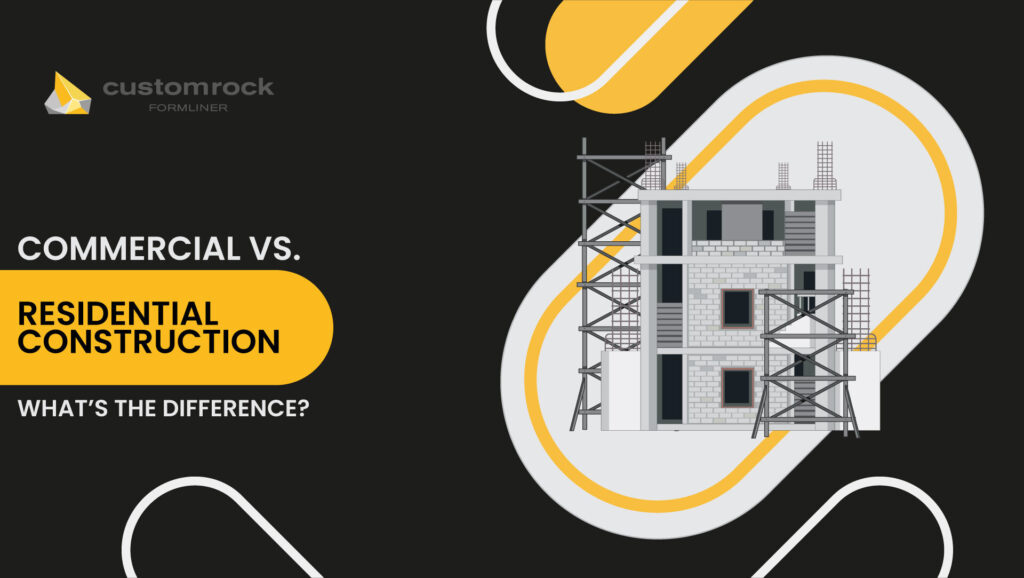
Residential vs. Commercial Construction: What’s the Difference
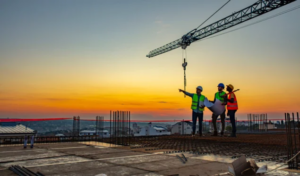
Construction projects are often divided into two main categories: residential and commercial. While they both include elements doing construction and structure construction, they differ entirely in equal aspects, including the kinds of materials used, their sizes, difficulty levels, prices of construction, and compliance with structural codes.
This article examines the residential and commercial construction categories in greater detail. It breaks down the discerning factors, from design to materials, from rules and regulations to project management.
1. Purpose and Function
The primary and most apparent difference between residential and commercial construction is in their use or the usage to which they are put.
Residential Construction
Residential construction specializes in building for habitation. These projects include individual dwelling units, townhouses, and other structures like apartments or condos. The idea is to create a noble, ergonomic living environment to match households’ expectations.
Homeowners or developers often initiate residential projects; most of the time, these are small-scale projects that are more cosmetic and comfort-oriented.
Commercial Construction
Commercial Construction is focused on business, retail, or institutional facilities. These include offices, warehouses, shopping centers, hotels, hospitals, and schools.
Such buildings are designed to perform specific purposes (likely to accommodate work, retail, or services) and must be very practical, block-like, and easily capable of handling traffic.
2. Specifications of the Materials and Structures
The type of material used in construction is the main reason that residential buildings are differentiated from commercial buildings.
Residential Construction Materials
They include wood, bricks, and Light Gauge Steel, focusing on cost-effective methods used in small constructions. Light gauge steel is used specifically because it is cheap, easy to process, and ensures good thermal performance stability.
However, these materials are normally not suitable for use in high-rise structures or for structures that require support of larger loads.
Commercial Construction Materials
While commercial construction materials are more robust, what about heavy structures, such as reinforced concrete, structural steel, and glass?
These materials are more robust and can better cope with traffic volumes in structures such as skyscrapers, shopping malls, or production factories.
Steel framing, for instance, results in superior strength, the ability to incorporate large clear spans, and the limited need for subordinate beams.
3. BOCA: Building Code and Zoning Regulations
Several legal measures also distinguish residential construction from various commercial structures regarding safety, accessibility, and environmental impact.
Residential Building Codes
These codes mainly address and aim to provide safety and habitability. They usually include requirements for fire protection, structural integrity, ventilation, and electrical installations. That’s why all residential codes also cover insulation or noise barriers that improve the living standards.
Local regulation of residential zones rarely differs. But its primary purpose is to ensure that residential areas are safe, independent from commercial production, and as quiet as possible.
Commercial Building Codes
They are stricter mainly due to the their size and the people who utilize them. Some sectors must embrace fire safety, heating, ventilation and air conditioning, emergency exits, and traffic density. Commercial projects also necessarily have to undergo more elaborate examinations most of the time.
Certain commercial buildings, such as hospitals or laboratories, require specific health and safety complaints over and above the code. While commercial zoning controls access to particular areas and might allow certain types of development, it may regulate the intensity of noise, pollution, or other nuisances.
4. Scale, Complexity, and Project Timeline
Commercial construction differs from residential construction in size, design, and time; such projects can take much time.
Residential Construction
Residential construction projects, especially single-family residential projects, are relatively small. They include simple designs for particular living areas, such as kitchens, bedrooms, and bathrooms.
Many residential constructions take three to six months, whereas if they are bigger or houses of individual designs, they may take more time. While new homes are generally simple, custom residential construction projects may have some complicated details. This is especially true for architectural design. However, they are noted to not get as complex as commercial ones.
Commercial Construction
Commercial construction is different from residential construction in that it usually involves large structures and systems that take months, if not years, to construct.
If you add specialized systems like elevators, fire suppression, electrical work, extra permits, and project coordination with big teams; commercial projects always have a longer timeline than residential projects.
Complex or extended projects such as a high-rise office block or a big shopping mall will need considerable planning and integration among the architect, engineers, and constructors.
5. Art and Aesthetics
Although both construction types are concerned with aesthetics, each type has its main focus most of the time.
Residential Construction Design
Residential Design focuses on decorating spaces for the inhabitants to feel comfortable and at home. Residents often get to participate in deciding on the Design of the structures, the type of designs, and the types of finishes that will suit their needs best.
Some aesthetic features, such as operable glass partitions, expansive shear or seen-through walls, or the introduction of interior gardens, among others, are included to make the place as comfortable as possible and as attractive as possible.
It is common for certain residential types to be constructed to use them for an extended time. For this reason, architectural design is just as critical as performance.
Commercial Construction Design
Commercial Design, on the other hand, is more practical. It must consider functions such as customer traffic in shops or stores, office spaces, or the comfort of guests in hotels.
For instance, in a store, they are interested in layouts that will enable customers to browse around, and in a business, they would be interested in floor plans that are more flexible.
6. Scope of the Project: Project Management and Labor Needs
The management process and the employees’ requirements vary from residential to commercial construction.
Residential Project Management
It is commonly implemented on a limited number of contractors and subcontractors. One contractor is often responsible for a project, coordinating various professionals, such as plumbers, electricians, and carpenters.
In few cases, the homeowners deal with the project manager or the builder. Therefore, they are involved in the decision-making processes during construction.
Commercial Project Management
It requires a more extensive team than Residential Project Management. It involves architects, engineers, project managers, SES staff experts, and subcontractors in commercial tasks such as HVAC, electricians, and fire alarms.
In commercial construction projects, software and tools such as project information management are essential on a large scale. This is because they increase the efficiency of project delivery. Such large projects are always sensitive regarding safety and compliance and must be completed within a given timeframe.
7. Cost and Financing
Residential and commercial projects also have distinctions in the cost and funding of projects.
Residential Construction Cost
The cost of constructing a residential building depends on the size of the home, the location destined for the construction, and the design preferences.
The major expenditures in residential projects are typically funded through personal or mortgage loans. This is where homeowners have direct control over the spending.
This means that they have an opportunity to select affordable materials and features and orient themselves on the most critical aspects.
Commercial Construction Cost
Commercial Costs are usually steep and include size, material, and manpower costs, among others. More often, the financing obtained is business financing, credit, or public funding, which is sought for bigger structures such as hospitals and government buildings.
The budget for commercial projects is also more elaborate, as it deals with ROI through building purpose and utility to create revenues.
8. Insurance and Legal Part
It should be noted that Insurance and legal requirements differ between the two types of construction.
Residential Insurance
As it relates to residential properties, Residential Insurance generally covers the property and its occupants against loss, damage, or injury with little regard for structural deficiency. It may also include home warranties for some of the repair works within a given duration after the construction.
Commercial Insurance
Commercial Insurance is much broader than residential Insurance, normally consisting of property or physical injury, liability or workers’ compensation, and other losses.
Businesses using commercial real estate also need to meet precise legislative requirements to reduce legal risks, including accessibility, safety, and tenants.