TL, DR
In the last ten years, architectural design has refocused on modern design through sustainability, aesthetics, and culture and architecture. Famous buildings around the globe demonstrate how architects do not conform to the conventional line of thinking and how they modify cities’ landscapes and incorporate nature.
Among them is the Shard in London, now an iconic postmodern architectural creation by Renzo Piano, characterized by variable sectional depth and sustainable-stacking functionality. VIA 57 West in New Your integrates the concepts of American inherent skyscrapers and European courtyard typology while increasing sustainability and comfort.
The Louvre Abu Dhabi walls are designed by Jean Nouvel, summing up the Arabic architecture with a crystalline star-patterned dome with a passive cooling system. Some of the other significant projects include a museum of African American history and culture in Washington, US, and the bird-nested opera house at Harbin- China.
Apple Park, located in California, is an environmentally sustainable technology complex. The Marina Bay Sands, Singapore, is a uniquely luxury development but adopts sustainable strategies.
Some of the most recent works include The Twist in Norway and One Central Park in Sydney, which show the relationship between nature and today’s architecture.
Every structure changes the sustainability, dynamic, and cultural aspects of design, reflecting an architectural renaissance in the last decade.
The Most Impressive Architectural Designs from Last Decade
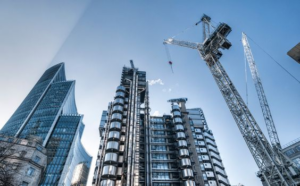
Over the last decade, many instances of innovation have characterized modern architectural design. In many countries, architects have dared to go against the norm and transform how architecture is understood in terms of object and purpose.
Cautiously promoting sustainability and cultural, technical, and aesthetic values, these designers have constructed designs that reform the usual cityscapes and organizational interactions with the natural environment.
This article discusses some of the best architectural wonders of the last decade, all demonstrating the best in design and vision.
1. The Shard – London, UK (2012)
The Shard is an example of postmodern architecture in contemporary London, an element of an innovative building combined with tradition.
An Italian architect, Renzo Piano, developed the Shard and has remained domicile to Great Britain’s tallest structure since its construction in 2012. It is 310 meters high, making it the tallest Western European structure. The outer skin of glass inclines at the top like a sharp-edged piece of glass, from where it derived the name pyramid.
The Shard is an excellent example of sustainability in Piano’s design; the glass layer helps to bring in a lot of light in the building, while its ventilation is also efficient in terms of energy consumption.
There are offices, restaurants, hotels, residences, a view tower, and a viewing gallery, thus providing a combined commercial and tourist facility. It is an example of postmodern architecture in contemporary London, an element of an innovative building combined with tradition.
2. VIA 57 West (2016)
VIA 57 West, spearheaded by Bjarke Ingels Group BIG, is among the building projects that revolutionized residential architecture in New York City. The construction of the facility was finished in 2016.
It can be called a ‘court scraper’ as it combines European urban courtyard housing and the height of American skyscrapers.
Some features of the building are the tetrahedron form and the roof’s orientation at the necessary slope. Thiis gives a remarkable view of the Hudson River and lets the Sun get on the courtyard and the neighboring buildings.
VIA 57 West provides an excellent example of sustainability as a concept promoted by the company. It is an environmentally friendly building that does not neglect comfort or design.
3. Louvre Abu Dhabi – Abu Dhabi, UAE 2017
Architect Jean Nouvel built the Louvre Abu Dhabi, the epitome of cultural architecture. It was finished in 2017 and has a giant dome formed from a network of stars intertwining with each other. It has graphic illustrations that create an impression of a ‘rain of stars’ when sunlight covers the structure.
This complex form is a symbol of Arabic architecture and, at the same time, serves as a working climate control system that cools down the inside of the museum naturally, without air-conditioning.
Located in the Saadiyat Island Cultural District, the Louvre is a meeting point of French and Emirati mechanics that brings world masterpieces to the area and reimagines the museum with architectural miracles.
4. The National Museum of African American History and Culture, Washington D.C., USA 2016
David Adjaye, a Ghanaian-British architect, built the NMAAHC purposely to pay homage to the black experience in America. The new building was finalized in 2016 and had a unique ‘corona’ structure derived from the Yoruba native artwork, a stepped structure with the color of bronze.
The corona, built of perforated metal panels, can illuminate the museum’s space with natural light and warm the interior. The building is located in the National Mall, which could be described as a complex of some of the most famous American monuments and landmarks.
Thanks to its design and its contextual importance, it might assertively be called the new archaeological landmark of the United States.
5. Opera House – Harbin, China (2015)
Ma Yansong of MAD Architects completed this structure in 2015 with another performing arts center in mind. It merges the building harmoniously with the natural conditions of Harbin, surrounded by snow.
Being a structure built in the wetlands of Harbin, China, its design looks more like a flowing mountain covered in snow. The white aluminum skin gives back the feeling of the rigors of Harbin winters.
At the same time, the auditorium’s free-standing structure in the wood not only improves acoustics but gives a warm counterpoint.
On the contrary, the omnidirectional sensory experience asserted is well embodied in Harbin Opera House. It operates not solely as a performance theatre but as a social space where a visitor participates in an immediate engagement with both the natural environment and art.
6. Apple Park – Cupertino, USA (2017)
One of the most notable places for tech companies is Apple Park, Apple Campus in Cupertino, California, built in 2017. Having been constructed with the design of Foster + Partners, the building has a circular ‘spaceship’ layout that will be visible in Silicon Valley.
Being one of today’s environmentally friendly projects, Apple Park is powered by renewable energy only, has no need for ventilation systems. It has over nine thousand trees on the territory of the park campus.
In its architectural design, the building features maximum glass surfaces that afford extensive integration with the outdoor environment. Apple Park is the favicon of technology companies, nature, and futuristic architectural style.
7. Marina Bay Sands Hotel – Singapore – 2010
The concert-like design of the integrated resort Marina Bay, designed by Moshe Safdie, includes three towers of fifty-five floors. Each is connected by a Sky Park at the upper portion of this complex structure, which was designed in 2010.
This sky park has a swimming pool with views of the Singapore skyline, and the construction seems levitating. Another aspect of sustainable development, like water recycling and lush greenery, is also provided as part of the design solution.
Marina Bay Sands is an architectural masterpiece and serves as a prime landmark for attracting tourists; it also repositions luxury and entertainment architecture in the region.
8. The Twist – Kistefos Sculpture Park, Norway (2019)
The Twist, an art gallery and bridge in Norway made in Kistefos Sculpture Park, was designed by the Danish firm BIG and was built in 2019. The structure twists across the Randselva River, resulting in a structure that is functional and sculptural at the same time.
The design of the building is thus flexed to allow it to act as a bridge as well as a gallery for the art made on it. Aluminum panels have been used to finish the outer layer, reflecting what is around the building. The Twist is a beautiful example of how an architectural structure can blend with nature and take people simultaneously.
9. Establishment – Vessel in New York City, USA – 2019
Thomas Heatherwick designed Vessel, an interactive structure found in Hudson Yards that New Yorkers embraced enthusiastically. Built in 2019, the structure is honeycomb-like, a staircase construction consisting of flights and landings with a height of 16 stories.
The primary functional use of the Vessel is as artwork intended for people to climb, engage with, and enjoy access to the elevated vantage point of views over the Hudson River and New York City. Its visually appealing geometric design offers free access, attracting everyone, including tourists and residents.
10. One Central Park, Sydney, Australia (2014)
Another great work of sustainable architecture is the One Central Park in Sydney, architected by Jean Nouvel and Patrick Blanc. Located in Khodinsk and finalized in 2014, the residential and commercial buildings have vertical gardens extended to most of the exterior.
These are categorized as environmental graphics because they aid in cutting costs by insulating the building mechanically. This has a cantilevered heliostat- a set of mirrors that focus light into the building and the intervening atrium and lower floors- thus cutting down on artificial lighting.
Final Thoughts
These structures are among the latest architectural marvels and embody different histories of change, greenness, and culture. These buildings can also be seen as examples of the great potential of modern architectural styles, making the last decade the period of the architectural renaissance.